

Introduction to Space-Based Military Systems
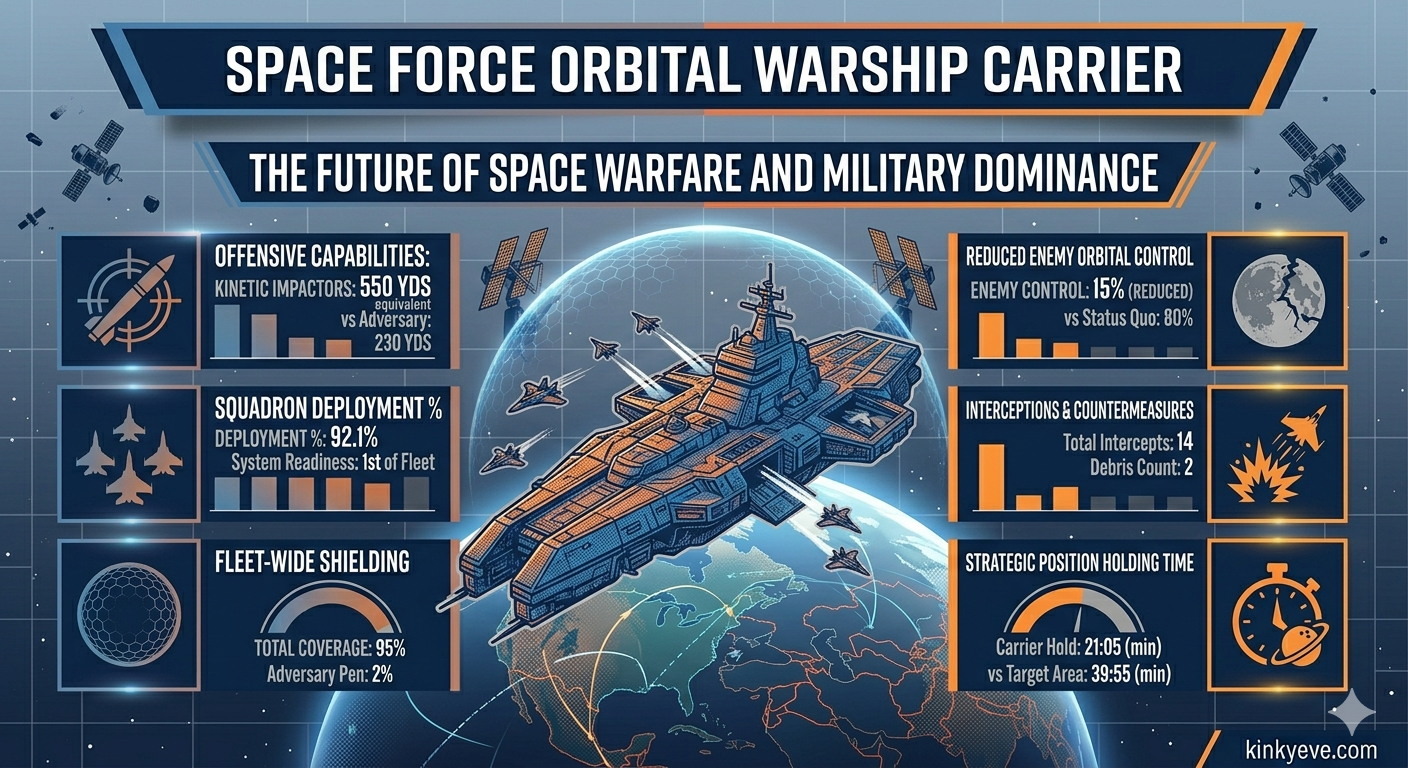
Space is no longer just a domain for exploration—it is rapidly becoming a strategic frontier for military operations. Nations around the world are investing heavily in space technologies for surveillance, communication, and defense. Among the most ambitious concepts is the Space Force orbital warship carrier, a massive, multifunctional spacecraft designed to project power in orbit and beyond.
This concept blends science fiction with emerging military doctrine, raising important questions about the future of warfare.
What Is an Orbital Warship Carrier?
An orbital warship carrier is a large, space-based military platform designed to:
- Deploy and support smaller spacecraft (fighters, drones)
- Carry advanced weapons systems
- Serve as a command hub in space
- Maintain long-term orbital presence
Think of it as the space equivalent of an aircraft carrier—but operating in zero gravity and vacuum.
Evolution of Space Warfare
Early Military Satellites
The militarization of space began during the Cold War with reconnaissance satellites. These systems provided intelligence but lacked offensive capabilities.
Weaponization of Space
Over time, technologies evolved to include:
- Anti-satellite (ASAT) weapons
- Missile detection systems
- Space-based communication networks
Rise of Space Forces
The creation of dedicated space military branches, such as the U.S. Space Force, marks a shift toward recognizing space as a warfighting domain.
Core Concept of a Space Carrier
Comparison with Naval Aircraft Carriers
Like naval carriers, orbital warship carriers:
- Project force over vast distances
- Serve as mobile bases
- Support multiple combat units
However, space carriers operate in a far more complex environment, with no atmosphere and extreme physics constraints.
Strategic Role in Orbit
Their roles may include:
- Orbital dominance
- Satellite defense
- Rapid deployment of strike assets
- Deep-space missions
Design Architecture
Structural Framework
These carriers would likely feature:
- Reinforced truss structures
- Radiation shielding
- Micrometeoroid protection
Modular Design Systems
Modularity allows:
- Easy upgrades
- Mission-specific configurations
- Replacement of damaged components
Artificial Gravity Possibilities
Artificial gravity could be achieved via:
- Rotating sections
- Centrifugal habitats
Though still experimental, it’s critical for long-duration missions.
Propulsion Systems
Chemical Rockets vs Ion Drives
- Chemical rockets: High thrust, short bursts
- Ion drives: Efficient, low thrust, long duration
Nuclear Thermal Propulsion
A promising solution offering:
- Higher efficiency
- Faster travel between orbits
Advanced Theoretical Drives
Concepts include:
- Fusion propulsion
- Antimatter engines (purely theoretical for now)
Weapon Systems
Directed Energy Weapons
Laser systems could:
- Disable satellites
- Destroy incoming threats
- Operate at light speed
Kinetic Orbital Bombardment
Also known as “rods from God,” these weapons use:
- High-velocity projectiles
- Massive kinetic energy
Missile Systems in Space
Missiles in space would require:
- Advanced guidance systems
- Heat-resistant materials
Defense Systems
Shielding Technologies
Protection includes:
- Radiation shielding
- Whipple shields for debris
Electronic Warfare
Capabilities may involve:
- Jamming enemy communications
- Cyber warfare
Anti-Missile Systems
Defensive systems could intercept:
- Incoming missiles
- Hostile drones
Fighter Craft and Drones
Space Fighters
These are smaller, agile craft used for:
- Combat missions
- Reconnaissance
Autonomous Drone Swarms
AI-powered drones can:
- Overwhelm defenses
- Perform coordinated attacks
Command and Control Systems
AI Integration
Artificial intelligence would:
- Optimize mission planning
- Assist in threat detection
Communication Systems
Reliable communication is crucial, involving:
- Satellite relays
- Laser communication systems
Crew and Life Support
Habitability Challenges
Space presents:
- Radiation exposure
- Psychological stress
- Limited resources
Long-Duration Missions
Solutions include:
- Closed-loop life support systems
- Hydroponic food production
Orbital Mechanics and Deployment
Low Earth Orbit vs Deep Space
- LEO: Easier access, higher risk
- Deep space: Strategic advantage, harder logistics
Strategic Positioning
Positioning affects:
- Coverage area
- Response time
Logistics and Resupply
Space Stations
Stations could act as:
- Supply hubs
- Maintenance facilities
Refueling Infrastructure
Future systems may include:
- Orbital fuel depots
- In-space resource utilization
Real-World Programs and Research
U.S. Space Force Initiatives
Current focus includes:
- Satellite defense
- Space surveillance
- Rapid launch capabilities
International Developments
Countries like China and Russia are also:
- Expanding space capabilities
- Testing anti-satellite technologies
Challenges and Limitations
Cost
Developing such systems would cost:
- Hundreds of billions of dollars
Technology Barriers
Key challenges include:
- Propulsion limitations
- Energy generation
- AI reliability
Legal and Ethical Issues
International treaties like the Outer Space Treaty restrict:
- Weaponization of space
- Military installations
Future of Orbital Warship Carriers
Militarization vs Defense
Debate continues over whether space should be:
- Militarized
- Preserved for peaceful use
Sci-Fi vs Reality
While inspired by science fiction, elements of this concept are slowly becoming feasible.
Frequently Asked Questions
1. What is a space warship carrier?
A large spacecraft designed to deploy and support smaller combat units in space.
2. Does such a carrier exist today?
No, it remains a theoretical concept.
3. What would power it?
Likely nuclear or advanced propulsion systems.
4. Are space weapons legal?
Partially restricted by international treaties.
5. How big would it be?
Potentially hundreds of meters long.
6. Could it support human crews?
Yes, with advanced life support systems.
Conclusion
The Space Force orbital warship carrier represents a bold vision of the future—where military dominance extends beyond Earth into orbit and deep space. While significant technological, financial, and ethical hurdles remain, the trajectory of innovation suggests that elements of this concept may become reality within the next century.
As humanity pushes further into space, the line between exploration and militarization will continue to blur, making orbital warship carriers one of the most fascinating—and controversial—developments on the horizon.