

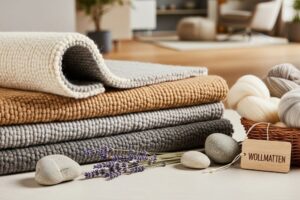
In an era where sustainability meets style, few home accessories embody this harmony as perfectly as Wollmatten. These traditional wool mats, whose name simply translates from German to “wool mats,” have quietly been gaining recognition far beyond their European roots. But what exactly are they, and why are they becoming the flooring choice of choice for eco-conscious homeowners, wellness practitioners, and interior design enthusiasts alike?
What Are Wollmatten?
At their core, Wollmatten are mats crafted primarily from natural sheep wool. Through traditional techniques like felting or weaving, raw wool fibers are transformed into dense, durable surfaces that offer a unique combination of comfort, insulation, and natural beauty.
Unlike synthetic mats derived from petroleum-based materials, Wollmatten are born from a renewable resource that has been part of human life for thousands of years. The wool fibers contain lanolin—a natural waxy coating—and have a microscopic structure that gives them remarkable properties no factory-produced material can fully replicate.
A Heritage Woven Through Time
The story of wool mats stretches back millennia. Nomadic tribes in Central Asia were among the first to craft rugs from sheared sheep wool, utilizing the fibers’ natural insulating properties to protect against harsh climates. Across Europe, the Middle East, and Central Asia, communities used felted wool for flooring, bedding, and protective coverings—essential items that provided warmth and comfort in everyday life.
In the German-speaking world, wool craftsmanship evolved alongside industrialization. Small workshops began producing specialized mats for homes, schools, and eventually yoga studios. One notable example is Bausinger, a family-run German manufacturer operating since 1975, which started creating wool yoga mats in the late 1970s when yoga was still relatively unknown in Germany.
Today’s Wollmatten honor this rich heritage while embracing modern design sensibilities. Each piece carries forward centuries of material knowledge, combining traditional craftsmanship with contemporary needs.
The Remarkable Properties of Wool
What makes Wollmatten so special lies in the extraordinary qualities of wool itself.
Natural Temperature Regulation
Wool fibers contain millions of tiny air pockets that trap body heat in cold conditions and release it when temperatures rise. No synthetic material matches this natural balance, making Wollmatten comfortable year-round.
Superior Moisture Management
Perhaps most impressive is wool’s ability to absorb up to 30 percent of its weight in moisture without feeling damp. Your mat quietly wicks sweat away while the surface stays dry—a game-changer for yoga practitioners and anyone seeking comfortable flooring.
Built-In Antibacterial Protection
Lanolin acts as a natural barrier against bacteria, mold, and dust mites. This means no funky gym-mat smell, less frequent cleaning, and a healthier indoor environment.
Hypoallergenic Properties
For allergy sufferers, Wollmatten offer significant relief. The fibers trap allergens and dust particles, preventing them from circulating in the air, while the lanolin coating repels dust mites naturally.
Impressive Durability
A well-crafted Wollmatte can last 10 to 15 years with proper care, and some high-quality pieces endure for decades—even generations. Research shows wool carpets can last up to 25 years, significantly outperforming synthetic alternatives.
Fire Safety
Unlike synthetic materials that melt when exposed to flames, wool chars naturally. Its high ignition temperature and inherent moisture content provide natural fire resistance without chemical treatments.
Versatile Applications Across Home and Beyond
The beauty of Wollmatten lies in their remarkable versatility.
In the Home
In living rooms, a Wollmatte serves as an inviting focal point—soft underfoot, warm in winter, and visually appealing year-round. Bedrooms become cozier with plush wool beside the bed, transforming the morning experience from cold floors to gentle warmth.
Entryways benefit from durable wool mats that trap dirt while providing a warm welcome. For families with young children or pets, Wollmatten offer safe, non-toxic surfaces that resist odors and clean up easily.
For Yoga and Meditation
Yoga practitioners increasingly choose Wollmatten for their natural feel and grounding qualities. With pile heights of 15 to 20mm, these mats provide exceptional joint cushioning—far more than the standard 4 to 6mm of rubber or PVC mats. The natural wool texture offers steady grip without stickiness, making them ideal for Yin, restorative, Hatha, and meditation practices.
In Building and Construction
The construction industry has discovered Wollmatten as an alternative to synthetic insulation. Installed in walls, ceilings, and floors, they improve thermal efficiency while naturally regulating moisture to prevent condensation and mold formation.
In Gardening and Agriculture
Perhaps unexpectedly, Wollmatten serve as biodegradable ground covers. Placed around plants, they suppress weeds, retain soil moisture, and protect roots from temperature fluctuations. Over time, the wool fibers decompose, releasing nutrients into the soil—a perfect solution for organic gardening.
The Environmental Case for Wollmatten
In a world grappling with plastic pollution and climate change, Wollmatten stand out as genuinely sustainable choices.
Renewable Resource – Sheep produce wool annually, making it a continuously renewable material. The shearing process doesn’t harm the animals, and the resource replenishes itself naturally.
Biodegradable – At the end of its long life, a Wollmatte returns to the earth without leaving harmful residues. This contrasts starkly with synthetic mats that can persist in landfills for centuries.
Low Energy Production – Manufacturing wool mats requires less energy and creates fewer pollutants than synthetic alternatives. The process typically avoids harsh chemicals and synthetic binders.
Reduced Waste – The exceptional durability of Wollmatten means fewer replacements and less waste over time. A single high-quality wool mat can outlast a dozen synthetic versions.
Choosing Your Perfect Wollmatte
Selecting the right Wollmatte involves considering several factors.
Purpose – Determine where and how you’ll use the mat. Yoga practice demands different qualities than an entryway rug or bedroom accent.
Thickness – For yoga and meditation, look for 15 to 20mm pile height. For high-traffic areas, consider flatweave or tightly woven styles that resist wear.
Size – Standard yoga mats measure 180 by 61 centimeters, but taller practitioners may prefer 200 by 75 or 200 by 90 centimeter options. For room rugs, measure your space carefully.
Certifications – Look for Oeko-Tex Standard 100 or GOTS certification, which verify that products meet rigorous safety and environmental standards.
Quality Indicators – Dense felting or tight weaving indicates durability. Reputable brands will be transparent about their materials and production methods.
Caring for Your Wollmatten
Proper maintenance ensures your Wollmatte serves you beautifully for years.
Regular Care – Vacuum weekly with a suction-only attachment. Avoid beater bars that can damage fibers. For deeper cleaning, shake the mat outdoors or brush lightly with a soft-bristle brush.
Spot Cleaning – Blot spills immediately with a clean, dry cloth. Never rub, as this pushes stains deeper. For stubborn marks, use mild soap mixed with water—test on a hidden area first.
Drying – Always air dry in the shade. Direct sunlight can fade natural colors. Never machine wash or wring a wool mat.
Rotation – Rotate your Wollmatte every three to six months to ensure even wear and prevent sun fading in specific spots.
Storage – Roll loosely rather than folding, and store in a breathable cotton or linen bag. Cedar balls or lavender sachets nearby help deter moths naturally.
The Investment Perspective
It’s true that Wollmatten typically cost more upfront than synthetic alternatives. Quality wool mats range from $60 to $200 and above, while synthetic options start much lower.
However, consider the lifetime value. A synthetic mat may need replacement every one to five years, while a quality Wollmatte serves faithfully for 10 to 15 years—and often much longer. When calculated as cost per use, wool often proves more economical. More importantly, the comfort, health benefits, and environmental advantages offer value that no price tag can fully capture.
A Thoughtful Choice for Modern Living
As we become increasingly conscious of our environmental impact and seek healthier living spaces, Wollmatten offer a compelling solution. They combine centuries of material wisdom with modern performance needs, providing comfort that synthetic materials simply cannot match.
Whether you’re rolling out a yoga mat for morning practice, warming a nursery floor for tiny feet, adding natural texture to a living space, or insulating a home more sustainably, Wollmatten represent a choice rooted in quality, responsibility, and timeless appeal.
In a world of disposable products and synthetic materials, choosing wool is choosing something different—something that honors tradition while serving the future. It’s a small choice, perhaps, but one that echoes with meaning. And on a cold morning, when bare feet